
You Paid Off the Car and Your Premium Did Not Change
Your lender required collision and comprehensive when you financed the vehicle. You made the final payment two years ago, notified your carrier, and expected something to shift. The premium stayed exactly the same. Your agent never called to walk you through what full coverage still earns its cost now that the loan is gone and you drive a third of the miles you used to.
This is the exact moment most retirees in Akron miss: paying off a vehicle changes the math, but carriers do not volunteer the coverage-fit conversation. The policy renews automatically. You keep paying for protection on an asset whose replacement value may now be lower than three years of collision premiums. That gap is what this article resolves.
Compare rates from carriers that specialize in senior drivers
Mature driver discounts, low-mileage rates, and coverage reviews — see what you're actually eligible for.
Get Your Free QuoteOhio Minimum Property Damage
$25,000
Ohio requires $25,000 property damage liability per accident under state minimums, but collision and comprehensive are voluntary once a lien is released. Most retirees continue both without comparing premium cost against actual vehicle value.
Ohio Revised Code bodily injury and property damage minimums
What Full Coverage Actually Protects Once the Lien Is Released
Full coverage means liability plus collision plus comprehensive. Liability is mandatory in Ohio and protects others when you cause an accident. Collision pays to repair your car after an accident you cause or a hit from another vehicle. Comprehensive covers theft, vandalism, weather damage, and animal strikes. When a lender holds the title, they require both physical-damage coverages to protect their collateral.
Once you own the car outright, collision and comprehensive protect only your own asset. The question becomes whether the premium paid each year justifies the maximum payout you could receive. If your car is worth $4,000 and collision costs $600 annually with a $500 deductible, the most the insurer would pay after one claim is $3,500. Two years of premiums plus the deductible nearly equal the car's total value. That is the calculation most Akron retirees never make explicitly.
Comprehensive usually costs less than collision and covers risks you cannot avoid: hail, deer strikes, catalytic converter theft. Many retirees keep comprehensive and drop collision. Some drop both and bank the premium savings. The right answer depends on your vehicle's actual cash value, your deductible, your annual mileage, and whether you have emergency savings to replace the car if totaled.
Your carrier will not call you to say collision no longer makes sense. The renewal notice arrives with the same coverages. You must initiate the coverage-fit conversation.
How to Calculate Whether Collision Still Earns Its Cost
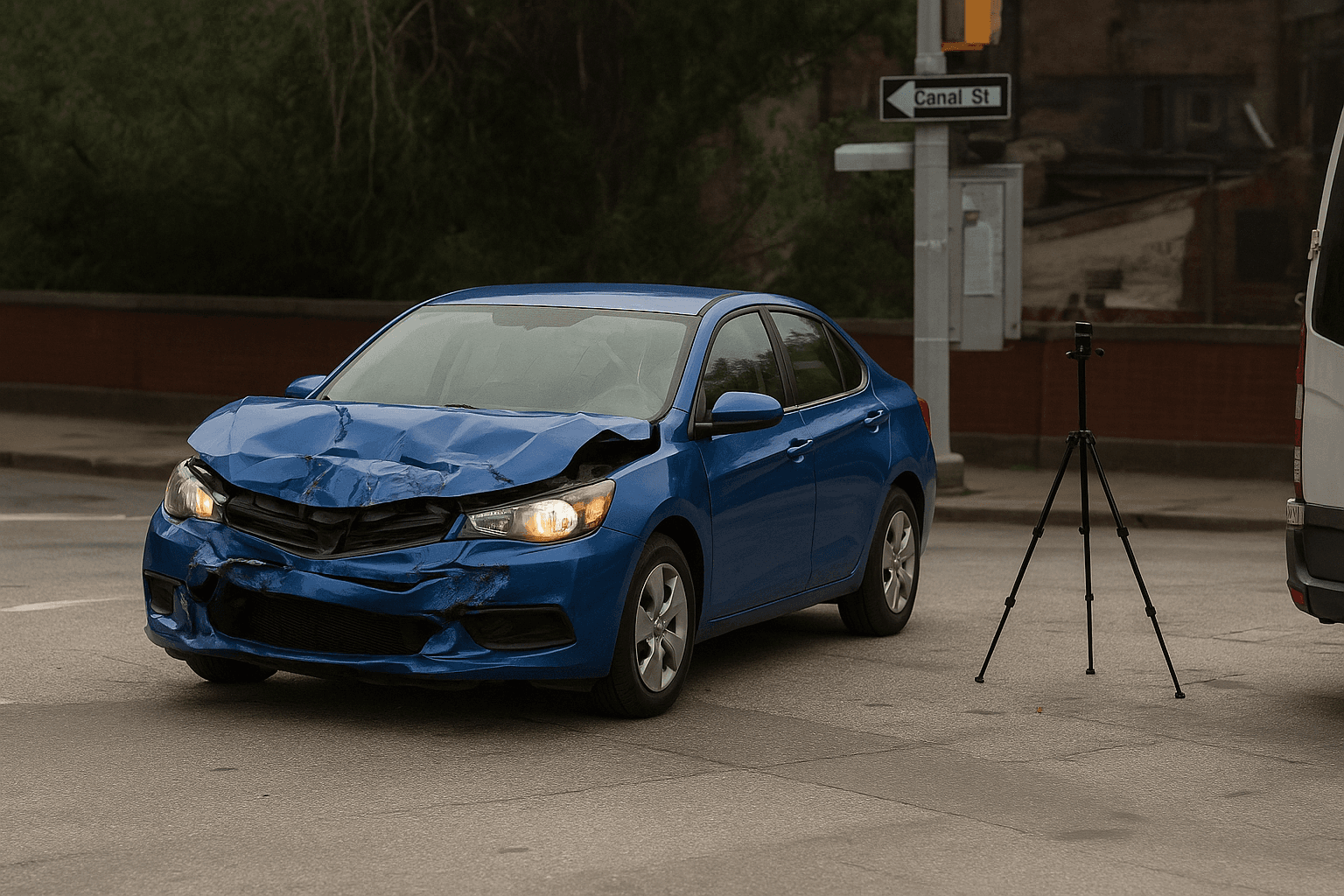
Look up your car's actual cash value on Kelley Blue Book or NADA in fair condition. Subtract your collision deductible from that value; this is the maximum your insurer would pay after a total loss. Now calculate how many years of collision premium equal that net payout. If your car is worth $5,000, your deductible is $500, and collision costs $650 per year, the net payout is $4,500 and you reach break-even in seven years. Most retirees do not keep a paid-off vehicle that long without incident.
A common threshold: if three years of collision premium plus your deductible approach or exceed the vehicle's value, the coverage no longer justifies its cost. At that point you are self-insuring by default. The question is whether to do so intentionally and redirect the premium into an emergency fund earmarked for vehicle replacement. Some Akron retirees keep collision on newer paid-off vehicles and drop it once the car ages past eight years. Others drop it immediately and increase their comprehensive deductible to $1,000 to lower that premium as well.
Related Articles





Ohio Carriers That Adjust Premiums for Low Mileage and Mature Drivers
Retirees in Akron drive far less than they did during working years. Commute miles are gone. Annual mileage often drops below 7,000. Fewer miles on the road mean lower collision risk, but most carriers do not automatically adjust your rate when mileage changes. You report the new figure at renewal or request a mileage audit mid-term.
Progressive, Geico, Allstate, Nationwide, and State Farm all write in Ohio and offer usage-based or low-mileage programs. Progressive Snapshot and Allstate Drivewise track actual miles and driving behavior. Nationwide SmartMiles charges a base rate plus pennies per mile. State Farm offers a low-mileage discount when annual miles fall below a carrier-defined threshold. Each program structures differently; some require a plug-in device, others use a smartphone app, and a few rely on odometer photos submitted at renewal.
Ohio law requires insurers to offer a mature-driver discount to operators aged 60 and older who complete a state-approved accident prevention course. The discount amount is not fixed by statute; each carrier sets it in their filed rating plan. The statute is Ohio Revised Code Section 3937.43. Most carriers apply the discount only after you submit the course-completion certificate. If you took the course two years ago and never filed the certificate with your agent, the discount is not on your policy. Certificates typically expire after three years, and the discount lapses unless you retake the course and resubmit.
Carriers Writing in Ohio
25
At least 25 carriers write auto policies in Ohio, including standard, preferred, and non-standard markets. Retirees comparing coverage fit and mileage programs should request quotes from at least three carriers that explicitly offer mature-driver and low-mileage discounts.
Ohio carrier data from state Department of Insurance filings
Medical Payments and PIP Coverage When You Have Medicare
Ohio does not require personal injury protection. Medical payments coverage is optional. MedPay pays your medical bills after an accident regardless of fault, up to your selected limit, typically $1,000 to $10,000. Many retirees wonder whether MedPay duplicates Medicare and whether the premium justifies keeping it.
Medicare is your primary health coverage. MedPay is excess: it pays deductibles, copays, and expenses Medicare does not cover, and it pays immediately without waiting for Medicare processing. If you go to the emergency room after an accident, MedPay covers the Medicare Part B deductible and the 20 percent coinsurance. For a $5,000 ER bill, Medicare pays 80 percent after the deductible and MedPay covers the rest. Some retirees keep a $2,000 MedPay limit to cover out-of-pocket costs. Others drop it entirely if they carry a Medicare supplement plan that already covers gaps.
The decision hinges on your supplemental coverage. If you have Medigap Plan F or Plan G, your out-of-pocket exposure is minimal and MedPay adds little. If you have Medicare Advantage with higher copays or a high-deductible supplement, a small MedPay limit may be worth $30 to $50 annually. Ask your carrier what MedPay costs at $1,000, $2,000, and $5,000 limits and compare that to your actual Medicare gap risk.
When to Keep Comprehensive and Drop Collision
Comprehensive covers risks you cannot avoid by driving carefully: hail, falling branches, catalytic converter theft, deer strikes. These risks do not decline with lower mileage. Collision covers accidents you cause or another driver causes. Lower annual mileage reduces collision exposure meaningfully but does nothing for comprehensive risk. That is why many Akron retirees keep comprehensive and drop collision once the vehicle ages.
A typical split: collision costs $500 to $800 annually on an older vehicle with a $500 deductible; comprehensive costs $150 to $250 with the same deductible. If your car is worth $6,000 and you drive 5,000 miles a year in low-traffic suburban routes, collision may not justify its cost. Comprehensive at $200 annually still makes sense if catalytic converter theft is common in your zip code or if you park outside during hail season. Run the same break-even calculation for each coverage separately.
Compare Carriers With Your Actual Profile
Your current carrier knows you paid off the vehicle because you notified them when the lien released. They did not reduce your premium or suggest a coverage review. Other carriers in Ohio compete specifically for low-mileage retirees with clean records. The comparison decision is whether your current rate reflects your actual risk or whether you are still paying for a profile that no longer applies.
Request quotes from at least three carriers writing in Ohio that offer mature-driver and low-mileage discounts. Provide your exact annual mileage, your age, your completion of a state-approved defensive driving course if applicable, and the coverage structure you want: liability-only, liability plus comprehensive, or full coverage. Ask each carrier how their mature-driver discount works, whether mileage below 7,000 miles triggers a separate discount, and whether they offer usage-based programs that price per mile. State Farm, Nationwide, Progressive, Geico, and Erie all write in Akron and structure differently for this profile. One will price your actual exposure more favorably than the others.