The Question Your Renewal Notice Never Asks
You made the final car payment six months ago. Your renewal notice arrived last week with the same premium you've paid for years, full coverage intact. Nothing on that notice suggested you now face a choice, so you paid it. Most retirees in Ohio do exactly this: they keep collision and comprehensive coverage on paid-off vehicles because the renewal process never prompts a review, and carriers have no incentive to suggest you drop coverage that protects their loan exposure when no loan remains.
The decision whether to keep full coverage on a paid-off car is not about age or driving ability. It is a replacement-value question most retirees never calculate until an adult child asks why they are still paying collision premiums on a 12-year-old sedan. This article walks the math, the Medicare coordination most agents never mention, and the coverage structure that makes sense when you own the car outright and drive 6,000 miles a year instead of 15,000.
Compare rates from carriers that specialize in senior drivers
Mature driver discounts, low-mileage rates, and coverage reviews — see what you're actually eligible for.
Get Your Free QuoteOhio Bodily Injury Minimum Per Person
$25,000
Ohio requires $25,000 per person, $50,000 per accident bodily injury, and $25,000 property damage. Dropping collision does not touch liability, which protects your retirement assets if you cause an accident. The minimum is the floor; retirees with home equity or savings often carry higher limits.
Ohio Revised Code § 4509.101
What Full Coverage Actually Protects
Full coverage is shorthand for a liability policy plus collision and comprehensive. Collision pays to repair your car after an accident you caused or a hit with another vehicle. Comprehensive covers theft, vandalism, weather damage, and hitting an animal. Both coverages protect the vehicle itself, not the other driver or their property.
Liability coverage remains mandatory in Ohio whether your car is paid off or not. It covers injury and property damage you cause to others. Dropping collision and comprehensive leaves liability intact, which is the coverage defending your assets if you are at-fault in an accident. Medical payments coverage and uninsured motorist protection also stay; only the coverages protecting your own vehicle are at issue in this decision.
When a lender holds the title, they require collision and comprehensive because the car secures their loan. Once you pay off the loan, that contractual requirement disappears. The coverage remains on your policy because renewal is automatic, not because it still earns its cost on a vehicle whose replacement value may now be less than three years of collision premium.
You are now deciding whether repairing a totaled 10-year-old car is worth three years of collision premiums when that same cash could fund the replacement outright.
The Replacement-Value Calculation
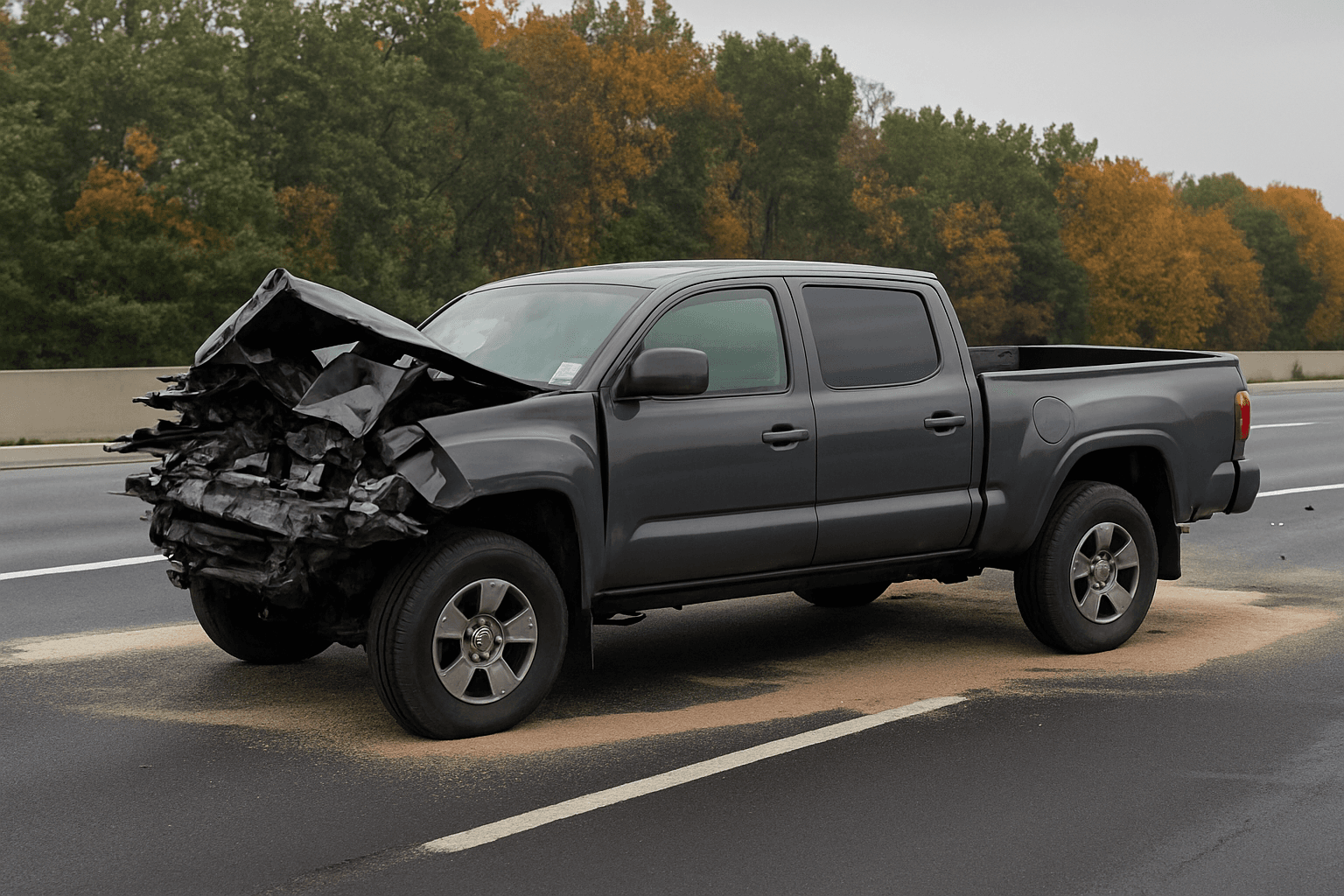
Pull your current policy declaration page and add your collision premium plus your comprehensive premium. Multiply that total by three years. Now look up your car's actual cash value using your VIN on a valuation tool such as Kelley Blue Book or NADA Guides, selecting the condition that matches your vehicle honestly. If three years of premium equals or exceeds the replacement value, collision and comprehensive are costing more than the maximum payout you could ever receive. The coverage has crossed the threshold where self-insuring makes financial sense.
Most retirees discover the crossover happened two or three renewal cycles ago. A 2015 sedan with 80,000 miles may carry a replacement value around $8,000. If collision and comprehensive together cost $600 annually, three years of premium total $1,800. Over ten years, you will pay $6,000 to insure a car worth $8,000, and by year six, depreciation pushes replacement value below cumulative premium. Carriers collect; you assume the risk either way because a total loss pays only current value, never what you paid in premium over the years.
Related Articles
Ohio-Specific Considerations
Ohio is an at-fault state, meaning the driver who caused the accident pays for the damage. If another driver totals your car and is insured, their property-damage liability covers your loss up to their policy limit. Your collision coverage becomes relevant only when the at-fault driver is uninsured, underinsured, or when you caused the accident. Collision also covers hit-and-run situations where the other driver is never identified. Comprehensive handles non-collision events: a tree falls on your car during a storm, your catalytic converter is stolen, or you hit a deer on Route 33.
Weather is a consideration in Ohio. Hail, high winds, and winter freeze-thaw cycles can total an older vehicle whose value sits near the threshold. Comprehensive premiums are lower than collision because these events are less frequent, but if your car is garaged and you live in a low-theft county, comprehensive may also cross the cost-benefit line. Check your county's theft and weather-claim rate with your carrier; some Ohio counties see frequent comprehensive claims, others almost none.
Medical payments coverage and Medicare interact in ways most retirees do not realize. Medicare is your primary health insurer after age 65. Medical payments coverage on your auto policy pays accident-related medical bills before Medicare, up to your policy limit, and does not require you to establish fault. If you carry a $5,000 med-pay limit and are injured in an accident, med-pay pays first; Medicare pays what med-pay does not cover. Dropping collision does not affect med-pay. Many Ohio retirees keep a modest med-pay limit because it covers passengers and closes the Medicare deductible gap without requiring fault determination.
Deductible and Savings-Account Logic
If you are not ready to drop collision entirely, raising your deductible from $500 to $1,000 cuts your collision premium by 20 to 30 percent, depending on the carrier. The higher deductible means you self-insure the first $1,000 of damage. For a retiree with $5,000 in an emergency fund, that risk is manageable, and the premium reduction compounds every year you do not file a claim.
Some retirees treat the premium savings as a self-insurance fund. If dropping collision saves $400 annually, deposit that $400 into a savings account earmarked for car replacement. After three years, you have $1,200 plus interest. After six years, $2,400. If you total the car in year four, the fund does not fully replace it, but it covers a significant portion, and if you never total it, the fund becomes the down payment on your next vehicle. This approach works best for drivers with clean records who have not filed a collision claim in ten years.
Carriers Writing in Ohio
25
Twenty-five carriers write auto policies in Ohio, including standard, preferred, and non-standard tiers. Some offer mature-driver discounts and low-mileage programs that reduce liability premiums even after you drop collision. Comparing carriers on liability-only or liability-plus-comprehensive configurations surfaces savings competing renewal notices never show.
Auto insurance carriers by state data, verified against NAIC filings
When Full Coverage Still Makes Sense
If your paid-off car is less than five years old, holds a replacement value above $15,000, and you cannot afford to replace it out-of-pocket after a total loss, keeping collision and comprehensive remains the correct financial choice. The same applies if you live in a high-theft ZIP code or park on the street in a county with frequent hail. The decision is not binary across all retirees; it depends on the specific vehicle, your savings position, and your county's claim environment.
Lease buyouts create a common scenario where full coverage remains appropriate. You bought out your lease on a three-year-old vehicle, so the title is now in your name and no lender requires coverage. But the car is nearly new, worth $22,000, and you drive it daily. Dropping collision here would expose you to a $22,000 replacement cost you likely cannot self-fund. The paid-off status is irrelevant when replacement value is high and savings are modest.
Compare Coverage Configurations Before Your Next Renewal
Pull your current declaration page and calculate three years of collision and comprehensive premium. Look up your car's actual cash value using your VIN. If premium exceeds value, request a quote from your current carrier for liability, medical payments, and uninsured motorist only. Then request the same quote from two other Ohio carriers writing in your county. Ohio law requires insurers to offer a mature-driver discount; confirm with each carrier how much completing an approved defensive driving course reduces your liability premium, because that discount still applies even after you drop collision. Compare the three quotes against your current full-coverage renewal premium. The difference is your annual decision cost: paying it buys collision coverage on a depreciating asset; keeping it funds your replacement savings account instead.