
When the Last Payment Clears and Nothing Changes
You made the final car payment six months ago. The title arrived. Your agent never called to discuss whether your coverage should change. Your next renewal notice showed the same collision and comprehensive premiums you paid when the lender required them, even though you now drive 5,000 miles a year instead of the 15,000 you logged during your working years. The carrier has no procedural reason to revisit your coverage: the policy renews automatically, and dropping collision requires you to ask.
This is the coverage-fit gap most Toledo retirees face with a paid-off vehicle of moderate age. Collision and comprehensive together often run $400 to $700 annually for a sedan worth $8,000 to $12,000. Whether that cost still earns its value depends on what you would actually lose in a total-loss scenario, how much of that loss your deductible already covers, and how many years of premiums you're willing to pay to insure the remainder. No agent initiates this conversation because keeping the coverage is the default path.
Compare rates from carriers that specialize in senior drivers
Mature driver discounts, low-mileage rates, and coverage reviews — see what you're actually eligible for.
Get Your Free QuoteOhio Bodily Injury Minimum Per Person
$25,000
Ohio requires $25,000 per person, $50,000 per accident bodily injury, and $25,000 property damage as the liability floor. Collision and comprehensive sit on top of this required base; they protect your vehicle, not the other driver's, and dropping them never affects your legal compliance.
Ohio Revised Code § 4509.51
What Full Coverage Actually Protects After the Lender Releases the Title
Collision covers damage to your vehicle when you hit another car or object, regardless of fault. Comprehensive covers theft, vandalism, weather damage, and animal strikes. Both pay up to your vehicle's actual cash value minus your deductible. Once the lender no longer has a financial interest in the car, you decide whether insuring that depreciated value justifies the annual cost.
A 2015 sedan in good condition typically holds a market value between $8,000 and $12,000 in the Toledo area. If your collision and comprehensive deductibles are $500 each, the maximum net payout in a total-loss scenario is the vehicle's value minus $1,000 in combined deductibles. The coverage insures roughly $7,000 to $11,000 of exposure, depending on current market value. Compare that insured amount against three to five years of annual premiums to see whether the arithmetic supports keeping both coverages.
The blocker is informational: you lack the current replacement-value figure and the multi-year premium total needed to calculate whether collision and comprehensive still earn their cost on this specific vehicle at this mileage.
How to Calculate Whether the Coverage Justifies Its Annual Cost
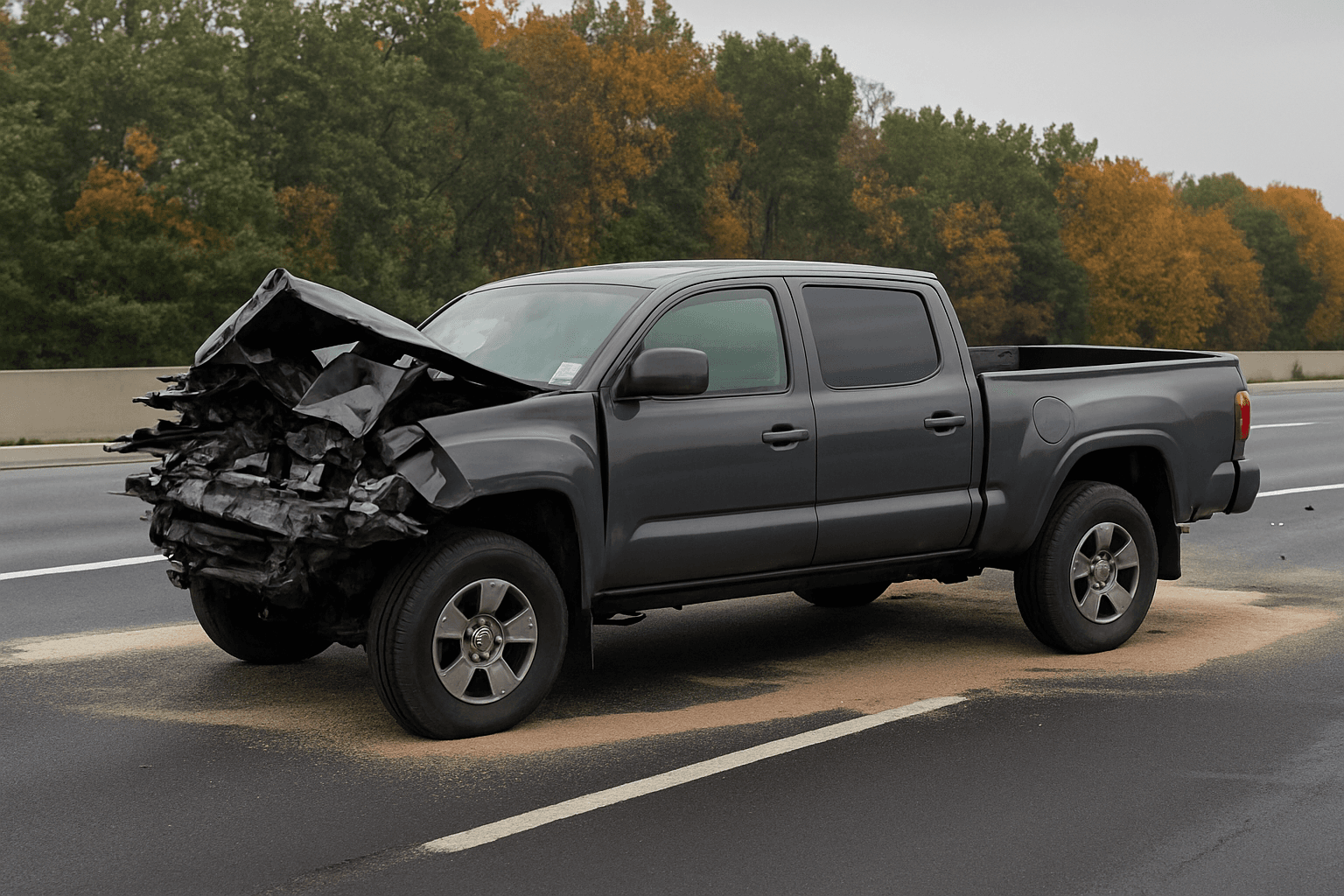
Check your vehicle's current market value using Kelley Blue Book or NADA Guides, entering your exact mileage and condition. Most 8- to 10-year-old sedans with moderate mileage fall between $8,000 and $12,000 in the Toledo market. Subtract your collision deductible and your comprehensive deductible from that figure; the result is the maximum you would receive in a total-loss claim. If your deductibles are $500 each and your car is worth $10,000, the coverage insures $9,000 of exposure.
Pull your current declaration page and find the six-month or annual premium for collision and comprehensive combined. Multiply the six-month figure by two if needed to get the annual cost. Then divide your insured exposure by the annual premium cost. If the result is fewer than three years, you are paying the equivalent of replacing the vehicle through premiums in a short window. Many retirees set a threshold of five years: if five years of collision and comprehensive premiums would exceed the insured value, they drop the coverage and self-insure the depreciated asset.
Related Articles






Ohio Mature-Driver Discount and Low-Mileage Programs for Retirees
Ohio Revised Code § 3937.43 requires insurers writing in the state to offer a mature-driver discount for operators aged 60 and older who complete a state-approved accident prevention course. The statute does not fix the discount percentage; each carrier sets the amount in its filed rating plan. The discount does not apply automatically at age 60. You must complete an approved course, submit the certificate to your carrier, and request the discount explicitly. Most certificates remain valid for three years, after which you must complete a refresher course to maintain eligibility.
Low-mileage and usage-based programs offer additional savings for retirees driving well below the state average. Progressive Snapshot, State Farm Drive Safe & Save, Nationwide SmartRide, and Allstate Drivewise all operate in Ohio and reduce premiums based on verified mileage and driving patterns. If you drive fewer than 7,500 miles annually, ask your carrier whether a low-mileage tier or telematics program applies. These programs stack with the mature-driver discount; one addresses your age and course completion, the other addresses your actual mileage and behavior.
Geico, Progressive, State Farm, Nationwide, Allstate, Erie, and Farmers all write personal auto policies in Ohio and offer both mature-driver and low-mileage options. Each carrier's underwriting approach to retirees differs. Some treat low mileage as a meaningful rating factor; others apply a smaller adjustment. Request quotes from at least three carriers, confirming that each quote reflects the mature-driver discount, your actual annual mileage, and any telematics program you are willing to enroll in. The comparison should happen with identical liability limits and deductibles so the variance reflects carrier pricing, not coverage differences.
Carriers Writing Personal Auto in Ohio
25
Twenty-five carriers confirmed writing personal auto policies in Ohio include standard-market, preferred-tier, and non-standard options. Retirees with clean records typically qualify for preferred or standard tiers; comparing at least three ensures you see meaningful pricing variance on the mature-driver and low-mileage factors.
NAIC company filings and state licensure data
Medical Payments Coverage and Medicare Coordination for Ohio Seniors
Medical payments coverage on your auto policy pays your medical bills after an accident regardless of fault, up to the per-person limit you select. Medicare is primary for covered services; med pay is secondary. If you are injured in an at-fault accident and incur $5,000 in hospital bills, Medicare pays its portion first, then med pay covers the Medicare deductibles, copays, and any expenses Medicare does not cover, up to your policy limit.
Many Toledo retirees carry $5,000 or $10,000 in med pay specifically to cover Medicare gaps. The coverage is inexpensive, typically adding $30 to $60 annually to your premium, and it coordinates with Medicare without requiring you to exhaust Medicare before the auto policy responds. If you drop collision and comprehensive to reduce cost, med pay is worth keeping. It protects you and your passengers in both at-fault and not-at-fault accidents, and it pays promptly while liability claims are still under investigation.
What Happens When You Drop Collision and Keep Liability and Comprehensive
Dropping collision while keeping comprehensive is a common middle path for retirees with paid-off vehicles. Comprehensive covers theft, weather, and animal strikes, risks that do not depend on how much you drive. Collision covers at-fault accidents and single-vehicle crashes, events whose probability scales with mileage. If you drive 5,000 miles annually on familiar routes in daylight, your collision exposure is materially lower than a 15,000-mile commuter's. Comprehensive remains inexpensive because the risk does not change with reduced mileage; collision is where the savings concentrate.
If you drop collision, you self-insure any at-fault or single-vehicle damage to your own car. Liability coverage still pays for damage you cause to another driver's vehicle or property, and comprehensive still covers non-collision risks to yours. The gap is at-fault repair or replacement cost to your vehicle. For a car worth $10,000 with a $500 deductible, you are self-insuring $9,500 of at-fault exposure in exchange for eliminating the annual collision premium. Many retirees accept this trade once the vehicle's depreciated value falls below a threshold that makes the premium no longer proportional to the risk.
Request the Coverage Change at Renewal or Mid-Term
Contact your agent or carrier directly and state that you want to remove collision coverage, keep comprehensive, or drop both, depending on your decision. The change takes effect immediately if requested mid-term, with a prorated refund of the unused collision premium. Most carriers process the request within one business day and issue an updated declaration page showing the revised coverages and new premium. Confirm the updated page reflects the correct effective date and that liability limits, med pay, and uninsured motorist coverage remain unchanged unless you intended to adjust them.
Before finalizing, verify that your mature-driver discount appears on the updated declaration page and that your annual mileage is recorded accurately. If you completed an approved accident prevention course and submitted the certificate, the discount should apply at this renewal. If it does not, ask why. Some carriers require re-enrollment each policy term; others apply the discount automatically for three years from the certificate date. The coverage-fit decision and the discount-eligibility decision are separate, but both affect your final premium, and both require you to verify the carrier applied them correctly.