
You Own the Car and the Premium Feels Wrong
The last loan payment cleared months ago. The title sits in your desk drawer. Your carrier's renewal notice arrived last week with the same collision and comprehensive premiums you've paid for years, and you're wondering whether you need them anymore. No lender requires full coverage now that you own the car outright, but every comparison site says you still need it without explaining why.
This article walks the replacement-cost threshold where collision and comprehensive stop earning their premiums for a paid-off vehicle. You'll see how Ohio's mature-driver discount mandate changes the math, which carriers writing in Hamilton treat retirees most favorably on physical-damage coverage, and what the decision looks like when you coordinate liability limits with the value of the car you're protecting.
Compare rates from carriers that specialize in senior drivers
Mature driver discounts, low-mileage rates, and coverage reviews — see what you're actually eligible for.
Get Your Free QuoteOhio Bodily Injury Minimum Per Person
$25,000
Ohio requires $25,000 bodily injury per person, $50,000 per accident, and $25,000 property damage as the liability floor. Collision and comprehensive are optional once no lender requires them, but your liability limits must remain at or above these minimums.
Ohio Revised Code §4509.101
Full Coverage Is Two Separate Decisions Now
Full coverage means liability plus collision plus comprehensive. The liability portion is mandatory: Ohio law requires you to carry at least the minimums shown above whether your car is paid off or financed. Collision and comprehensive are the optional piece. Collision pays to repair your car after an accident you cause or a hit from an uninsured driver when you carry uninsured motorist property damage. Comprehensive pays for theft, vandalism, weather damage, and animal strikes.
When you financed the car, the lender required both. Now that you own it outright, you decide whether the collision and comprehensive premiums are worth the maximum payout: the car's actual cash value minus your deductible. If your car is worth $4,000 and your collision deductible is $500, the most you can collect is $3,500. If collision costs you $400 annually, you're paying more than 10 percent of the car's value each year to insure it against total loss.
The liability decision is different. Liability protects your assets in a lawsuit after an at-fault accident. Retirement-era assets — home equity, savings, retirement accounts — are exposed when your liability limits fall short of the damages you cause. Most retirees should carry liability limits higher than the state minimum, and that decision is independent of what the car is worth.
The collision premium competes directly against the car's replacement cost. If the annual premium exceeds 10 percent of what the car is worth, collision stops earning its keep.
What Your Car Is Worth Determines the Math
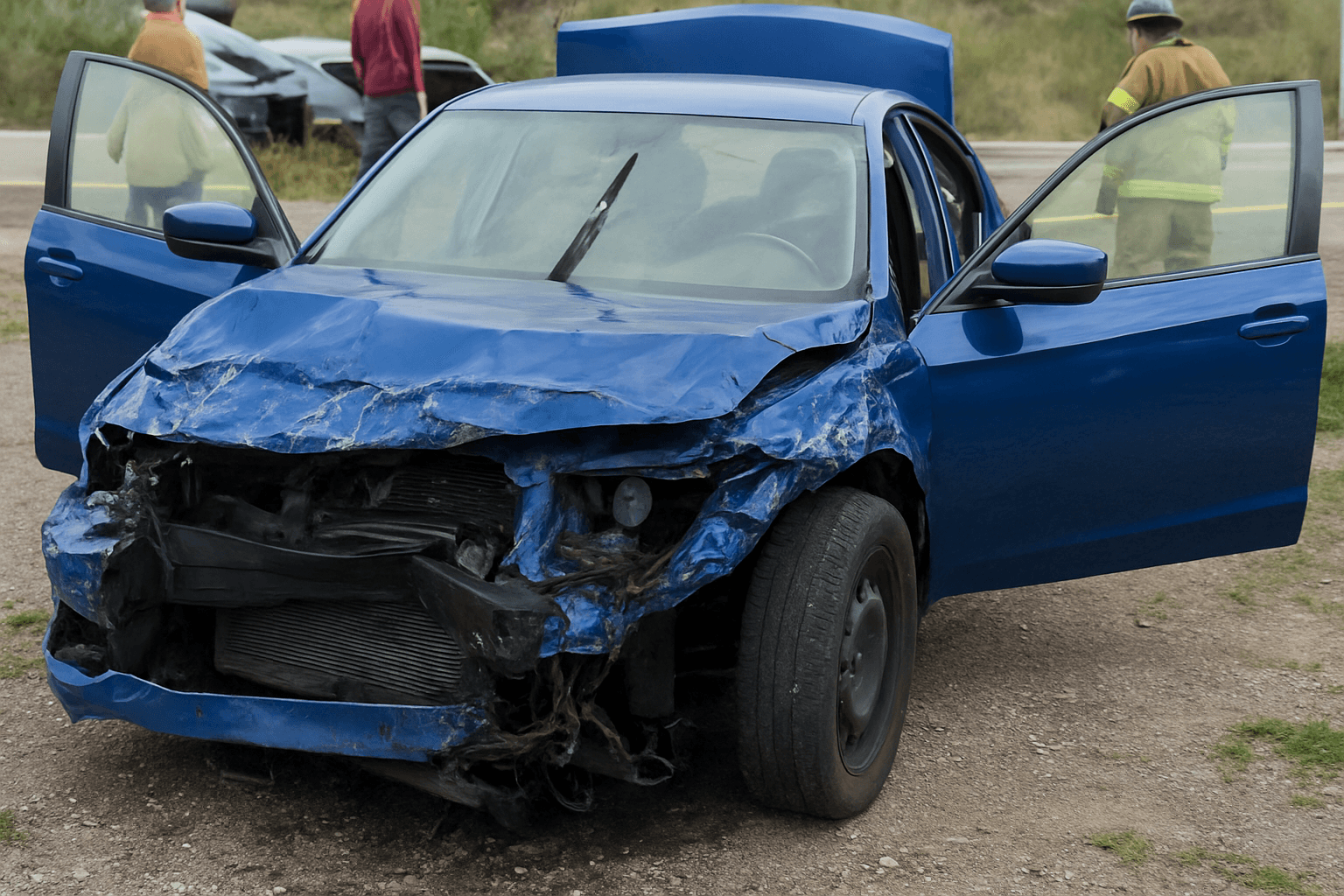
Look up your car's current value using your VIN, mileage, and condition on KBB or NADA. Use the private-party value, not trade-in. Subtract your collision deductible from that figure. The result is the maximum you can collect if the car is totaled. If that number is less than three times your annual collision premium, the coverage costs more than it protects.
A conventional threshold: drop collision and comprehensive when the car's value falls below $4,000 or when the combined annual premium for both exceeds 10 percent of the car's value. These are judgment calls, not mandates. If you drive 3,000 miles annually and park in a garage, the risk profile differs from a driver commuting daily in high-traffic areas. The math bends to your situation.
Related Articles





Ohio Requires Carriers to Offer a Mature-Driver Discount
Ohio Revised Code §3937.43 requires insurers writing in the state to offer a mature-driver discount to operators age 60 and older who complete a state-approved accident prevention course. The statute does not fix the discount percentage; each carrier sets the amount in its own rate filing. Most apply the discount to all coverages, including collision and comprehensive, but the amount varies by carrier.
The discount is not automatic. You must complete an approved course and submit the certificate to your carrier. Certificates typically expire after three years, and the discount lapses unless you renew. Many retirees complete the course once, receive the discount at the next renewal, and then lose it three years later when the certificate expires and they never submit a new one. Ask your carrier how long your certificate remains valid and mark the expiration date.
Carriers writing in Hamilton that offer mature-driver discounts include Geico, State Farm, Progressive, Nationwide, Allstate, and Erie. Not all carriers market the discount prominently; you must ask. Some require the course completion before quoting the discounted rate, so completing the course before shopping gives you the lowest baseline for comparison.
Carriers Writing Auto Insurance in Ohio
25
At least 25 carriers are licensed to write auto insurance in Ohio, including standard, preferred, and non-standard tiers. Retirees with clean records qualify for preferred-tier carriers offering the lowest rates and the widest discount menus. Shopping across three to five carriers reveals the spread.
Low-Mileage Programs Stack with Mature-Driver Discounts
You no longer commute. Many retirees drive 5,000 to 8,000 miles annually, well below the national average near 12,000. Carriers including Progressive, Nationwide, and Allstate offer low-mileage discounts triggered by annual odometer readings or telematics verification. Geico and State Farm use pay-per-mile or usage-based programs where the premium adjusts monthly based on actual miles driven.
These programs stack with the mature-driver discount. A retiree who completes the approved course and drives 6,000 miles annually qualifies for both, compounding the savings on all coverages. Ask each carrier whether their low-mileage program applies to collision and comprehensive or only to liability. Some carriers cap the low-mileage discount at liability, which reduces its value when you're deciding whether to keep physical-damage coverage on a paid-off car.
Telematics programs monitor mileage, time of day, braking, and speed. If you drive primarily during daylight hours at moderate speeds on familiar routes, telematics often produces a discount. If the monitoring feels intrusive or the discount requires installation of a device, ask whether an annual odometer declaration achieves the same result without ongoing tracking.
Compare Before You Drop Collision
Shop your current coverage configuration across three carriers before dropping collision and comprehensive. Request quotes with full coverage and quotes with liability only. The delta shows you what collision and comprehensive cost on your specific vehicle at your age and mileage. Some carriers price physical-damage coverage more aggressively for retirees than others, and the spread can exceed 40 percent between the highest and lowest quotes.
If collision costs you $300 annually and your car is worth $6,000, the premium represents 5 percent of the car's value. That may feel reasonable. If collision costs you $450 annually and the car is worth $3,500, you're paying nearly 13 percent of its value each year. The threshold is yours to set, but the comparison reveals the actual cost per dollar of coverage across carriers. Get quotes from Geico, State Farm, Progressive, Erie, and one non-standard carrier if your record includes any violations.