
When the Title Arrives and the Premium Does Not Change
You made the final payment, the lien released, and the title arrived showing you as sole owner. Your premium statement at the next renewal looked identical to the one before. The carrier did not drop collision or comprehensive. The agent did not call to ask whether you wanted to keep both. The coverage simply continued, automatically, at the same cost.
That continuation is not a requirement. Ohio law mandates liability coverage — bodily injury and property damage minimums of $25,000 per person, $50,000 per accident, and $25,000 property — but once the lender releases its interest, collision and comprehensive become optional decisions. Most carriers never flag the lien release as a moment to reassess coverage. The policy renews with the same structure it carried when the vehicle was financed, and the retiree on a fixed income keeps paying for coverage whose value may no longer justify its cost.
Compare rates from carriers that specialize in senior drivers
Mature driver discounts, low-mileage rates, and coverage reviews — see what you're actually eligible for.
Get Your Free QuoteOhio Bodily Injury Minimum Per Person
$25,000
Ohio requires $25,000 bodily injury per person, $50,000 per accident, and $25,000 property damage. Collision and comprehensive are not part of the state minimum; they are lender requirements that convert to policyholder judgment calls once the lien clears.
Ohio Revised Code §4509.101
What Full Coverage Actually Means After the Lien Drops
Full coverage is not a legal term. It is a bundled descriptor carriers and agents use to mean liability plus collision plus comprehensive. While the vehicle carried a loan, the lender required both physical-damage coverages to protect its secured interest. Once you own the vehicle outright, those coverages protect only your equity in the asset.
Collision pays to repair or replace your vehicle after an at-fault accident or a collision with an object. Comprehensive pays for damage from theft, vandalism, weather, fire, or animal strikes. Both operate on a per-incident deductible you selected when the coverage began. Neither is required by Ohio statute once the lender no longer holds a lien.
The coverage decision now rests on whether the annual premium for both coverages, minus the deductible you would pay out of pocket in a claim, justifies the vehicle's current market value. A 2015 sedan with 90,000 miles may have a private-party value near $6,000. If collision and comprehensive together cost $800 annually and your deductible is $500, a total-loss claim nets you $5,500 after the deductible. That margin narrows every year as the vehicle ages and the replacement cost declines.
Your carrier will not tell you when collision and comp stop penciling out. The lien release triggers no internal review. The coverage persists until you actively remove it.
The Coverage-Fit Judgment for a Paid-Off Vehicle
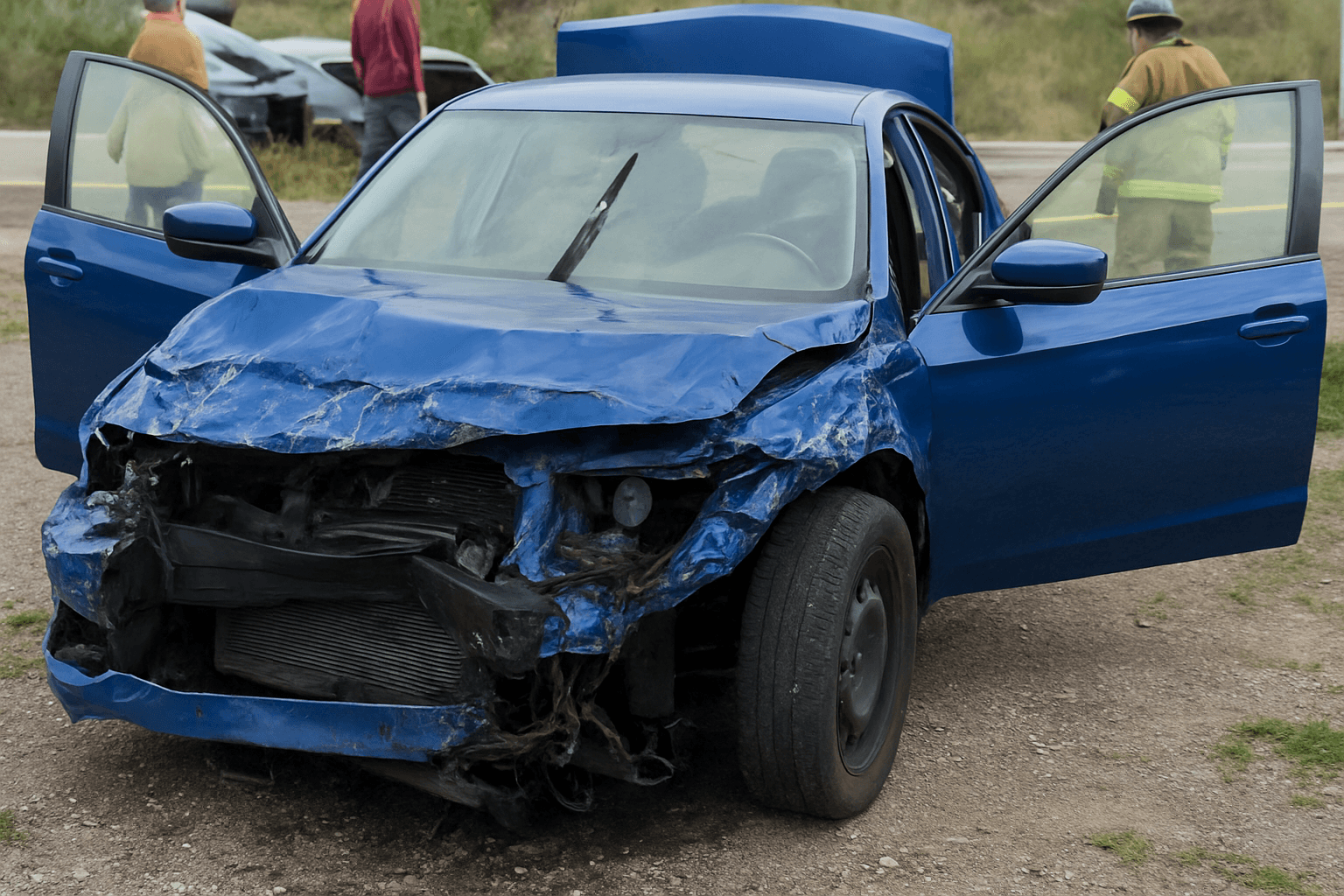
Start with the vehicle's actual cash value. Not what you paid, not its sentimental worth, but the amount a claim adjuster would use to settle a total loss today. NADA Guides, Kelley Blue Book, and Edmunds all publish private-party value estimates based on year, make, model, mileage, and condition. Use the private-party figure, not trade-in, because that is what the carrier references in a total-loss settlement. If the vehicle is worth $5,000 or less and you have sufficient savings to replace it without financing, the traditional rule of thumb suggests dropping both coverages and banking the premium savings.
Then calculate what you actually recover in a claim scenario. Subtract your deductible from the vehicle's value. If the vehicle is worth $6,000 and your deductible is $1,000, a total-loss payout is $5,000. Compare that net recovery to the annual cost of both coverages. If collision and comp together cost $900 per year, you are paying nearly 18 percent of the net claim value annually. That ratio gets worse as the vehicle ages and its value declines while the premium often holds steady or increases due to claims inflation and rate adjustments unrelated to your vehicle.
Related Articles





How Retiree Mileage and Driving Profile Bend the Calculation
Collision risk correlates with exposure. A vehicle driven 15,000 miles annually during a working-age commute faces higher at-fault accident probability than one driven 4,000 miles per year for errands, medical appointments, and occasional trips. Many Lorain retirees report mileage dropping by two-thirds or more once the daily commute ends. Lower mileage does not automatically lower your collision premium unless you enroll in a low-mileage or usage-based program, but it does reduce the statistical likelihood you will file a collision claim.
If your driving profile now involves minimal highway exposure, predictable local routes, and significantly reduced annual mileage, the collision coverage you are paying for protects against an event whose probability has dropped substantially. That shift does not change the math on comprehensive — theft, hail, and deer strikes remain location-dependent rather than mileage-dependent — but it weakens the case for carrying collision on a vehicle worth less than $8,000 when your annual mileage is under 5,000.
Some retirees keep comprehensive and drop collision, reasoning that weather and theft risk persists while their reduced mileage lowers at-fault accident exposure. Others drop both and self-insure the vehicle entirely, maintaining only the state-required liability minimums. The correct answer depends on the vehicle's value, your liquid savings, and your risk tolerance. What is not correct is allowing the coverage to continue by default simply because the renewal notice listed it and you did not actively remove it.
Liability Limits and Retirement-Era Asset Exposure
Dropping collision and comprehensive does not eliminate your coverage obligation. Ohio requires liability insurance as a condition of vehicle registration. The state minimum — $25,000 bodily injury per person, $50,000 per accident, $25,000 property damage — is the floor, not a recommendation. Those limits were set decades ago and have not kept pace with medical costs, vehicle replacement costs, or the plaintiff judgments a retiree with home equity and retirement accounts may face after an at-fault accident.
Retirement often brings increased asset exposure. A paid-off home, retirement savings, and pension income are all vulnerable to a civil judgment if you cause an accident and the damages exceed your liability limits. A bodily injury claim from a serious at-fault collision can easily exceed $50,000 once hospital bills, lost wages, and pain-and-suffering claims accumulate. The state minimum leaves you personally liable for the difference.
Many retirees reassess collision and comp but never revisit liability limits. If you decide to drop physical-damage coverage, redirect a portion of that premium savings toward increasing your liability limits to $100,000 per person and $300,000 per accident, or higher. Some carriers offer $250,000/$500,000 or even $500,000 combined single-limit policies at modest incremental cost. Umbrella policies that sit above your auto liability start near $1 million in coverage and often cost less than $400 annually for retirees with clean records.
Carriers Writing in Ohio
25
Twenty-five carriers write auto policies in Ohio, with tier and program variation across standard, preferred, and non-standard markets. Collision and comprehensive pricing, low-mileage program availability, and senior-discount structures vary by carrier filing. Comparing coverage fit requires quotes from at least three carriers.
Ohio Department of Insurance carrier database
How to Compare Coverage Options Across Lorain Carriers
Request quotes in three configurations: full coverage as currently structured, liability-only with higher limits, and liability plus comprehensive only. Some carriers price comprehensive separately at a cost low enough to justify keeping it even after dropping collision, particularly in areas with higher animal-strike or hail frequency. Lorain sits in a region where deer-vehicle collisions and occasional severe weather make comprehensive worth evaluating independently.
Ask each carrier whether they offer a low-mileage discount and what documentation they require. Some apply the discount automatically at renewal if your annual mileage falls below a threshold; others require an odometer photo or annual declaration. Usage-based programs that track mileage via a mobile app or plug-in device can reduce premiums for retirees driving under 7,000 miles annually, but the discount applies to the liability portion of the premium, not just collision.
Make the Coverage Decision Before the Renewal Locks
Your renewal notice arrives 30 to 45 days before the policy term ends. That window is your opportunity to adjust coverage without waiting another six or twelve months. Contact your agent or carrier directly, state that your vehicle is paid off and you want to evaluate whether full coverage still fits, and request the quote configurations described above. If the agent resists or suggests keeping everything as-is without running the numbers, that is a signal to compare carriers.
Document the vehicle's current mileage, its market value using at least two valuation sources, and your total annual premium broken out by coverage type. Most declarations pages itemize the cost of liability, collision, comprehensive, and any optional coverages separately. Use those line items to isolate what you are paying for physical-damage coverage. Then compare that cost to the vehicle's value and your claim-recovery scenario after the deductible. The math will clarify whether the coverage earns its cost or whether you are paying for protection whose value has eroded below its price.