Updated July 2026
What Is Collision Coverage Insurance?
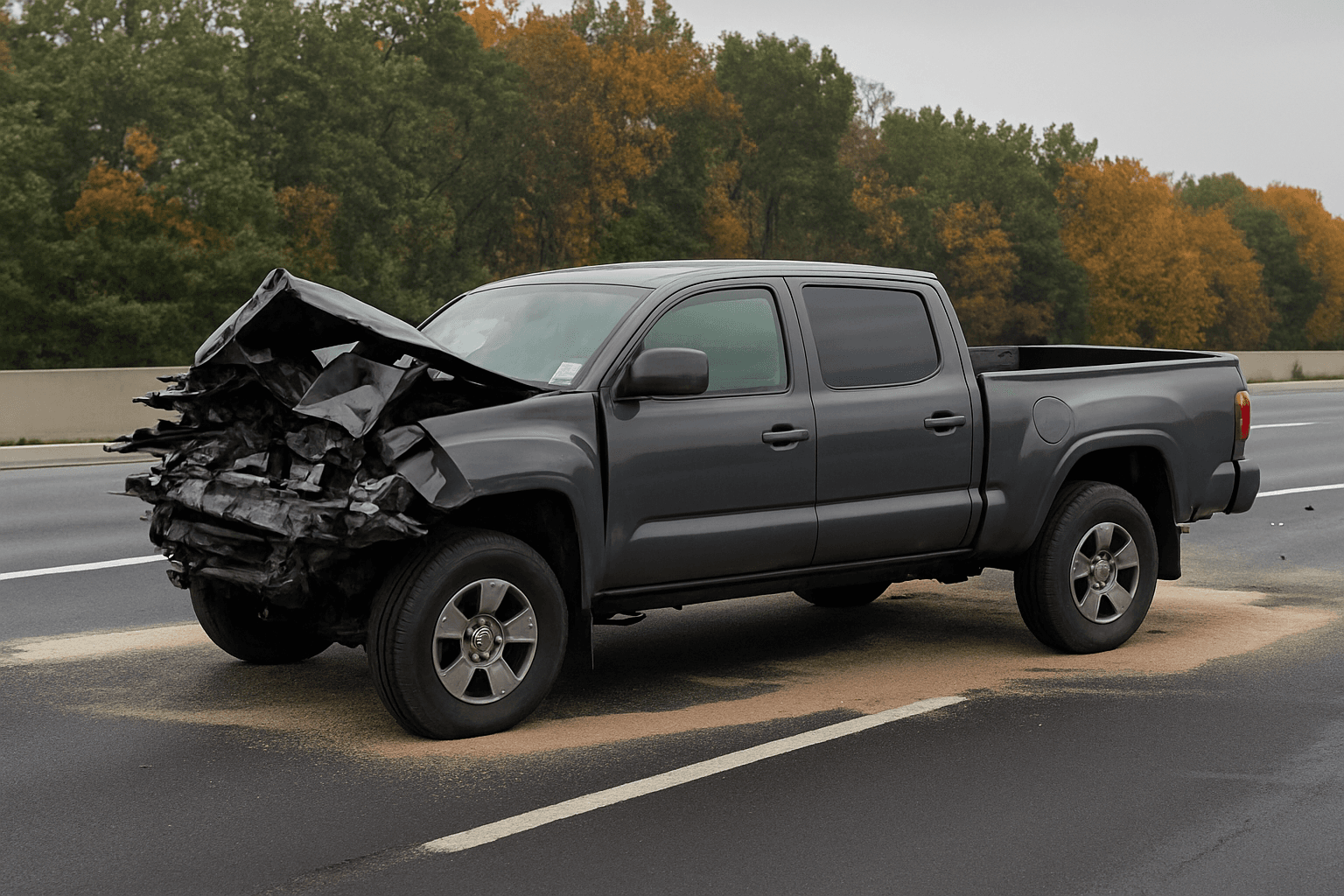
Collision coverage pays for damage to your vehicle when you hit another car, object, or roll over — regardless of who caused the accident. The insurer pays the lesser of repair cost or your vehicle's actual cash value, minus your chosen deductible. If you financed or leased your vehicle, the lender requires this coverage until the loan is satisfied.
- You brake late at a red light and hit the car ahead, causing $4,200 in damage to your front bumper and hood. The other driver's car has $2,800 in damage. Your collision coverage pays the $4,200 repair to your vehicle minus your $500 deductible — you receive $3,700. Your liability coverage, not collision, pays the $2,800 to repair the other driver's car.
- Winter conditions cause you to lose control and strike a highway guardrail, resulting in $3,100 in body and suspension damage. No other vehicles involved. Collision pays the full repair cost minus your deductible, even though weather caused the loss. If your car is worth $2,800 and repair costs $3,100, the insurer totals the vehicle and pays you $2,800 minus your deductible.
- Your vehicle is twelve years old with a market value of $3,400. Annual collision premium runs $420 with a $500 deductible. Maximum payout after one claim is $2,900. If the car requires two years of premiums to break even on a single total loss, and you drive 4,000 miles yearly with a clean record, collision may cost more than it can ever return.
Who Needs Collision Coverage Insurance?
Retirees with vehicles worth more than $5,000 or still carrying a loan balance should maintain collision coverage — lenders require it, and total loss would exceed most emergency savings targets. Drivers leasing a vehicle or financing through a credit union face mandatory collision requirements until the contract ends.
Compare your vehicle's current market value to your annual collision premium plus deductible. If one total-loss claim would return less than three years of premiums, and you drive fewer than 7,000 miles yearly with a clean record, the math favors dropping coverage and self-insuring the risk.
How Much Does Collision Coverage Insurance Cost?
Collision typically adds $28–$65 per month to your premium, or $340–$780 annually, depending on vehicle value, deductible, and driving record.
- Vehicle age and depreciated market value — older vehicles cost less to insure because maximum payout decreases each year.
- Deductible choice — selecting $1,000 instead of $250 can cut collision premium by 30–40%, but you pay more out-of-pocket per claim.
- Driving record and claims history — at-fault accidents in the past three years increase collision premium more sharply than liability.
- Annual mileage — retirees driving under 5,000 miles per year qualify for low-mileage discounts that reduce collision cost by 10–20% with many carriers.
- Garaging location within Ohio — urban counties with higher accident frequency and repair costs carry steeper collision premiums than rural areas.